What will be the CCP’s bottom-line strategy for dealing with Trump 2.0? And what will be the possible changes in U.S.-China relations over the next four years?
Hello, everyone,
welcome to "Inconvenient Truths".
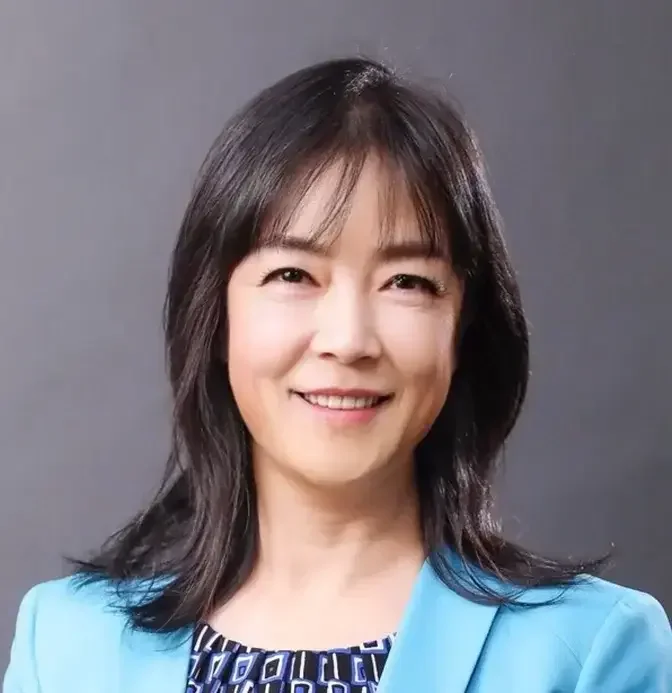
I am your host Jennifer Zeng.
Did you watch Trump's
inauguration speech yesterday?
If you did, what were your key takeaways?
Feel free to leave a comment
and let us know.
If the inauguration ceremony
had not been relocated at
the last minute but
proceeded as originally planned,
a dramatic and
unprecedented scene would
have taken place.
The CCP's Vice President Han
Zheng and Taiwan's
Legislative Yuan Speaker
Han Kuo-yu would have
appeared at the same venue
at Trump's inauguration.
Some say this is a challenge
Trump posed for the CCP.
Today, we will focus on
discussing the CCP's bottom-line
strategy for dealing
with Trump 2.0 and the possible
changes in U.S.-China
relations over the next four years.
According to sources within the CCP,
Xi Jinping has already
formulated a strategy to
deal with Trump's return and
the bottom line of his
willingness to make a deal with Trump.
At a meeting of the CCP's
Politburo in December 2024,
Xi Jinping gave a speech titled
'Overcoming the Challenges
of the Trump Tornado with Great Struggle.'
In this speech,
Xi Jinping pointed out that
Trump has two major strategic weaknesses.
First,
Trump's policy to make America great
again only cares about
itself and not others.
He treats all countries as targets for
extortion and exploitation,
showing extreme selfishness.
His America-first policy is
based on damaging the
interests of other countries.
As a result,
Trump's America will
inevitably provoke
resentment and retaliation
from countries worldwide,
leading to significant changes,
even rapid deterioration,
in relations between America
and its traditional allies.
Xi Jinping believes Trump's
second strategic weakness
is that because Trump is
eager to change America and
the world according to his will,
but his term is only four years,
his ambitions are high,
yet his term is relatively short.
This will inevitably lead to
Trump's administration being hasty,
impatient for success,
and focused on short-term effects.
This could greatly increase
the likelihood of a
disconnect between ideals and reality,
and between measures and outcomes,
during Trump's term.
Based on these two judgments,
Xi Jinping called on the
entire party to promote
what he calls a spirit of
proactive struggle.
He wants to seize the
opportunity presented by
major shifts in the
international geopolitical
landscape to break apart
and dissolve the existing political,
military, and economic
alliances centered around America,
putting the U.S. in an
unprecedented state of
isolation since the end of World War II.
This speech has now been
communicated down to the
county and regiment-level
officials of the CCP,
in order to form a
so-called strategic
consensus across the entire party.
Xi Jinping also requires the
CCP to manage its own affairs well.
In diplomacy,
the focus is on dividing and
weakening the relationships
between the United States and Europe,
Japan, South Korea, Britain, Australia,
and Middle Eastern countries.
These are to be considered
the top priorities of the
CCP's diplomatic work.
At the same time,
using international
organizations led by the
CCP like BRICS and the
Shanghai Cooperation
Organization as support points,
efforts will be made to expand economic,
trade, political,
diplomatic, and military
relations with countries in
the Global South,
along with cultural exchanges.
The aim is to create a
situation in diplomacy
where the U.S. becomes
increasingly isolated, while
the CCP has friends everywhere.
In summary,
Xi Jinping's overarching
strategy to deal with the
"Trump Storm" is called
"accumulating strength
through great struggle, and
negotiating deals from a
position of strength."
The key of these "deals" is to
resolve the Taiwan issue
according to the will of the CCP
At the expanded meeting of
the CCP's Politburo and the
National Security Commission in December 2024,
Xi Jinping mentioned that
in his face-to-face talks
with President Biden,
he directly demanded that
Biden not only state that
he does not support Taiwan independence
but also explicitly state
opposition to Taiwan
independence and support
for cross-strait reunification.
Based on this,
Xi Jinping pointed out that
in the struggle and
negotiations with Trump,
the same demands should be
made directly to Trump,
as these are the most
important points of focus
for China in any deal.
In the internal speeches at
these two meetings,
Xi Jinping made the same judgment.
He believes that if the
Trump administration
publicly expresses
opposition to Taiwan
independence and support
for the peaceful
unification across the strait,
it would have a shocking
and destabilizing effect on
Taiwan's military morale and society.
This, in turn,
would create favorable
conditions for the CCP to
use overwhelming military
power to swiftly take Taiwan,
achieving a decisive
victory in a single battle.
During the two meetings mentioned above,
Xi Jinping required all
relevant CCP departments to
follow his core content and
basic guidelines of both
fighting and making deals
with the Trump administration.
The Foreign Ministry should
use private but effective
channels to make Trump's
team clearly understand
that if Trump publicly
opposes Taiwanese
independence and supports
peaceful unification
across the Taiwan Strait,
the CCP is willing to make
appropriate, or even significant,
concessions in other areas.
According to insiders within the CCP,
all relevant departments
have already begun specific
deployments based on Xi
Jinping's core strategy for
making deals with Trump.
For example,
although Cambodia has
practically become a political,
economic, and military colony of the CCP,
fully obeying the CCP in diplomacy,
in December 2024,
Cambodia allowed U.S.
warships and Japanese
vessels to enter its ports
facing the South China Sea.
This is actually a signal
sent by the CCP to Trump in advance.
That is, if the U.S.
shows sincerity in making a
deal on the Taiwan issue,
the CCP is willing to make
corresponding concessions
in the South China Sea.
The above information was
disclosed by Yuan Hongbing,
a former professor at Peking University,
in his latest program.
Yuan Hongbing also revealed
that at the end of December 2024, Chen Yixin,
Xi Jinping's confidant and
the Minister of State
Security, made new task
assignments for the
comprehensive suppression
of Falun Gong activities overseas.
Chen Yixin required that
while continuing to
intensify legal battles and
propaganda wars against Falun Gong,
efforts should focus on
weakening the connections
between Falun Gong-run
media and politicians in the U.S.
They aim to effectively
reduce the influence of
Falun Gong media and Shen
Yun performances on U.S. society.
The focus should be on
preventing Falun Gong's
media from disrupting deals
between the CCP and the U.S.
Chen Yixin also pointed out that in 2025,
the focus of the CCP's
overseas suppression of
Falun Gong should be on two
regions that could
significantly disrupt the
deal-making strategy
between the CCP and the U.S.:
the U.S. and Taiwan.
Chen believes that Falun
Gong has become a force
seriously disrupting the
CCP's propaganda and United
Front Work efforts towards Taiwan
and will inevitably pose a
major obstacle to
establishing strategic
deal-making between the CCP
and the U.S. after Trump takes office.
Therefore,
it is essential to strengthen
both the united front work
and suppression of Falun Gong in Taiwan.
The focus of the suppression
and united front work
should be on the media leaders,
key members,
and influential figures of
Falun Gong in Taiwan.
It is reported that the CCP
has created a list of 52
key Falun Gong
figures in Taiwan for
united front work and suppression,
including Ming Juzheng,
a retired professor from
National Taiwan University.
In line with Xi Jinping's
core strategy for making deals with Trump,
the Taiwan Affairs Office
of the CCP has taken related actions,
mainly spreading skepticism
about the U.S. in Taiwan,
striving to make the notion
that the U.S. is unreliable
become the mainstream
opinion in Taiwanese society.
Additionally,
they aim to cultivate pro-CCP
political parties and
figures within Taiwan,
particularly influencing
and controlling members of the
Legislative Yuan to create a
situation favorable to the CCP.
Furthermore, at the end of December 2024,
the Chinese military held a
training conference
attended by high-ranking
officers from the Eastern
and Southern Theatre Commands.
At this meeting, Zhang Youxia,
the Vice Chairman of the
Central Military Commission,
required that the Chinese
military should be ready to
act quickly. If there are
significant social disturbances
in Taiwan,
the military must enter
combat readiness in the
shortest possible time.
The period before and after
the 2026 local
elections in Taiwan will be
a time of heightened political conflict.
Zhang Youxia proposed that
before the 2026 elections,
the Chinese military must
act like
thunder,
always ready to fight, using any
sudden large-scale social
disturbances in Taiwan as a
signal to launch combat operations.
Once again,
the above is the content
disclosed by Yuan Hongbing
in his latest program.
From this intelligence,
we can see that Xi Jinping
is most obsessed with what
he calls the unification of Taiwan.
He believes that if he can
"solve the Taiwan issue" during his term,
it would not only secure
his lifelong leadership
but also ensure his place in history. You know,
recently,
I have done four programs in a
row, refuting the New York
Times' false reports and
attacks on Falun Gong and Shen Yun.
An American asked me, puzzled,
why a major newspaper like
the New York Times would
bother with a small group
like Falun Gong.
He called Falun Gong a small
group because there indeed
aren't many Falun Gong
practitioners in the U.S.,
most of them live in China.
However,
this "small group" is what the CCP
fears the most. Overseas,
Falun Gong practitioners
were the first to argue
that the CCP is not China,
distinguishing between the Party,
the country, and its people.
This viewpoint was later
publicly endorsed by former
U.S. Secretary of State Michael Pompeo,
causing great alarm in Beijing.
Additionally, the Epoch Times, founded
by Falun Gong practitioners,
published the "Nine
Commentaries on the Communist Party,"
which thoroughly exposed
the evil nature and
historical crimes of the CCP,
leading to over 400
million Chinese people
signing up to leave the Party,
the Youth League,
and the Young Pioneers,
significantly
undermining the CCP's ruling foundation.
Meanwhile,
Falun Gong members are the
hardest to bribe or infiltrate,
rendering the CCP's usual
tactics against dissidents ineffective.
Because of this,
the CCP sees Falun Gong's activities,
including their newspaper
the Epoch Times
and Shen Yun Performing Arts, as a huge,
if not the biggest,
obstacle to their
infiltration and united
front work in both the U.S. and Taiwan,
which is why
they work so hard to
suppress Falun Gong.
The New York Times
publishing as many as 10
articles attacking Falun
Gong and Shen Yun within
just over four months is
happening in this context.
So, will the "struggle" between
CCP and the U.S. result
in the "East rising and West
declining" as the CCP hopes?
I believe that's absolutely impossible
unless U.S. politicians lose
their sanity and, like they
did decades ago,
"embrace the panda" to extend
the life of the CCP once again.
From the CCP's perspective,
they have long seen the U.S.
as their primary
ideological enemy with
ambitions to replace the U.S.
in global dominance;
from the U.S. side,
if Trump truly wants to
make America great again,
he must counteract
the CCP's infiltration
and harm in various aspects,
or one day America might
collapse from within
without even realizing it.
In fact,
I believe history has given us an
opportunity to dismantle the CCP,
and I greatly hope that the
U.S. government will actively
help the Chinese people
break away from the CCP's tyranny,
rather than always being on the defensive,
responding passively to the
CCP's endless, unscrupulous,
and unrestricted warfare.
Currently,
Trump has just taken office and
has not yet clearly stated
his policy or attitude towards the CCP.
However,
in yesterday's inauguration speech,
he explicitly mentioned
that the U.S. gave the Panama
Canal to Panama, not to China,
and now it's controlled by China,
so we need to take it back.
When he said this,
Xi Jinping's representative,
Vice President Han Zheng,
was there listening,
and I imagine he felt quite embarrassed.
Reports say that Trump
indicated he might visit
China within 100
days of taking office,
but it's not yet clear if
this news is true.
Also,
Trump has ordered a delay in
implementing the TikTok ban
and has not issued punitive
measures against China,
including imposing a 60%
tariff on Chinese goods.
These actions have caused
much debate among overseas
Chinese communities.
Some believe that Trump,
being essentially a businessman,
might act out of business
instincts to make deals with the CCP.
Personally,
I think Trump is someone who
doesn't play by conventional norms,
so I'm not willing to jump
to any conclusions about
him in this regards until we
see more of his actions.
But one thing is clear:
if he wants to achieve
making America great again
and usher in an
unprecedented golden age for the U.S.,
he cannot avoid directly
addressing the CCP,
which is the greatest
threat to global security,
to achieve his goals.
Well, that's all for today.
Please like and share this video,
and leave a comment to give me a boost.
Also,
since YouTube has demonetized my channel,
I encourage you to either subscribe to my
X account,
follow me on Ganjing World,
or visit my website at
jenniferzengblog.com to
sign up for a membership or
make a donation.
Your support is vital to
enable me to continue
sharing the "Inconvenient Truths".
Thank you.
See you next time!